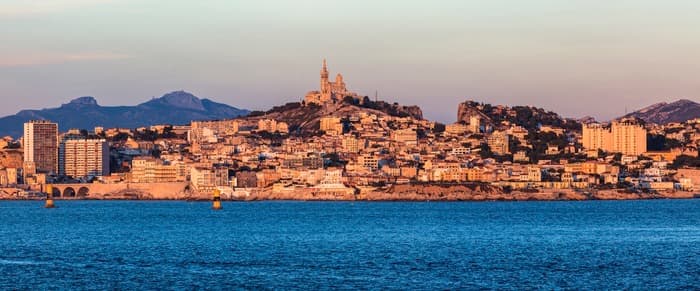
Livorno is a gritty city with a long and interesting history. In the early Middle Ages it alternately belonged to Pisa and Genoa. In 1421 Florence, seeking access to the sea, bought it. Cosimo I (1519–74) started construction of the harbor in 1571, putting Livorno on the map. After Ferdinando I de' Medici (1549–1609) proclaimed Livorno a free city, it became a haven for people suffering from religious persecution; Roman Catholics from England and Jews and Moors from Spain and Portugal, among others, settled here. The Quattro Mori (Four Moors), also known as the Monument to Ferdinando I, commemorates this. (The statue of Ferdinando I dates from 1595, the bronze Moors by Pietro Tacca from the 1620s.)In the following centuries, and particularly in the 18th, Livorno boomed as a port. In the 19th century the town drew a host of famous Britons passing through on their grand tours. Its prominence continued up to World War II, when it was heavily bombed. Much of the town's architecture, therefore, postdates the war, and it's somewhat difficult to imagine what it might have looked like before. Livorno has recovered from the war, however, as it's become a huge point of departure for container ships, as well as the only spot in Tuscany for cruise ships to dock for the day.Most of Livorno's artistic treasures date from the 17th century and aren't all that interesting unless you dote on obscure baroque artists. Livorno's most famous native artist, Amedeo Modigliani (1884–1920), was of much more recent vintage. Sadly, there's no notable work by him in his hometown.There may not be much in the way of art, but it's still worth strolling around the city. The Mercato Nuovo, which has been around since 1894, sells all sorts of fruits, vegetables, grains, meat, and fish. Outdoor markets nearby are also chock-full of local color. The presence of Camp Darby, an American military base just outside town, accounts for the availability of many American products.If you have time, Livorno is worth a stop for lunch or dinner at the very least.
Calculated from the average time in port. Return deadlines vary by sailing; check the daily programme on board.
Between the terminal, city and airport
Travel between the terminal, city center, railway station and airport.
TrainAbout 1 hr 30 min
Livorno Centrale → Firenze Santa Maria Novella
At the red Trenitalia ticket machine at Livorno Centrale station, set the destination to Firenze Santa Maria Novella (Firenze SMN) and buy a ticket. Do not get off at Firenze Rifredi; continue to Firenze Santa Maria Novella.
TaxiAbout 10 minEUR 10~EUR 15
Porto Industriale → Piazza Grande
Take a taxi from the stand outside the terminal to Piazza Grande. It takes about 10–15 minutes depending on port congestion.
ShuttleAbout 15 minEUR 5
Porto Industriale → Piazza Grande
Take the port shuttle from outside the terminal building and get off at Piazza Grande. The usual fare is 5 euros per person, payable in cash. Some cruise lines may include it in disembarkation costs.
ShuttleAbout 10 minEUR 5~EUR 7
Livorno Cruise Terminal (Porto Mediceo) → Piazza Grande (Livorno Center)
Take the official port shuttle (Port Shuttle) outside the terminal exit and get off in the square behind City Hall in central Piazza Grande.
TrainAbout 15 minEUR 3
Livorno Centrale → Pisa Centrale
Take a Trenitalia Regionale train from Livorno Centrale toward Florence or Pisa to reach Pisa Centrale in about 15 minutes.
Livorno places to explore
Explore 14 checked places. Select a pin to see its card, or choose View on map from a card.
Sights
Fortezza Vecchia
A medieval coastal fortress guarding the entrance to Livorno's old Medici harbor, where you can see the harbor and Mediterranean from Matilda Tower and the Renaissance defensive walls.
Visit
about 1 hr
Admission
Free
Areas open to visitors may change depending on cultural events and exhibition schedules.
Sights
Monumento dei Quattro Mori
A signature Livorno monument with four chained prisoners sculpted in bronze at the base of a marble statue of Grand Duke Ferdinando I de' Medici.
Visit
about 25 min
Admission
Free
Located in the square directly in front of the Medici Old Port, with easy pedestrian access.
Sights
Cattedrale di San Francesco
Livorno's cathedral, built on Piazza Grande in the late 16th century, preserving an impressive gilded wooden ceiling and restored Renaissance masterpieces.
Visit
about 35 min
Admission
Free
Access to the interior may be restricted during religious Mass services.
Sights
Santuario della Madonna di Montenero
A sanctuary to Tuscany's patron saint, Maria, rising on a hill south of Livorno. Take the funicular up for panoramic views of the sea and coast.
Visit
about 1 hr 15 min
Admission
Free
You can conveniently reach it by transferring to the Funicolare di Montenero at the stop at the foot of the hill.
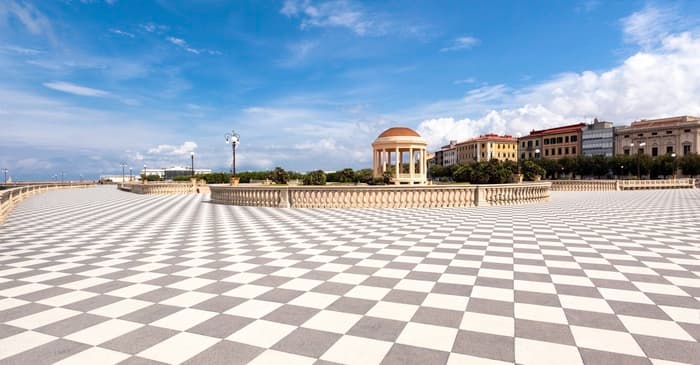
A vast seaside terrace facing the Ligurian coast, with more than 34,000 black-and-white checkerboard tiles and a classic balustrade meeting the sea.
Visit
about 45 min
Admission
Free
The best sunset viewpoint in Livorno, where crowds gather for an evening stroll.
Sights
Fortezza Nuova
A red-brick pentagonal fortress built by the Medici Grand Duchy in the late 16th century. Its interior, surrounded by canals, is a public park with excellent canal views.
Visit
about 50 min
Admission
Free
Walk along the fortress walls and enjoy views of the canals of Venezia Nuova.
Trips nearby
With enough time in port, you can explore beyond the city. One-way times are approximate.
Pisa
About 40 min each wayTime at destination About 9 hr 30 min
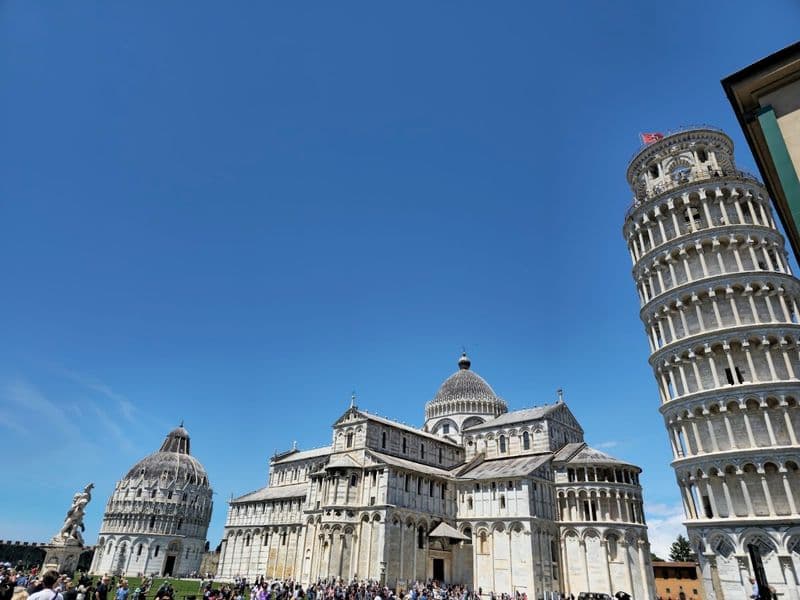
SightsLeaning Tower of Pisa
The bell tower standing on Piazza dei Miracoli, one of the four world-famous medieval buildings in the square.
The main photo spot in front of the Leaning Tower can be very crowded, so consider an early time if you want to take photos at a relaxed pace.
The square containing the Leaning Tower of Pisa, cathedral, baptistery, and cemetery. The square and its four buildings were among the first sites in Italy to be listed as UNESCO World Heritage Sites.
The Cathedral of Santa Maria Assunta on Piazza dei Miracoli. Among the stages of life symbolized by the square's buildings, the cathedral and tower represent 'life'.
Wear clothing that covers your shoulders and knees when entering the cathedral.
A popular grocery deli in a lane near the University of Pisa, serving handmade panini generously filled with Cinta Senese cured ham, porchetta, and Tuscan pecorino.
The shop is small, so takeaway queues can be long; it is convenient to eat in a nearby square after picking up your order.
A long-established restaurant on a small old-town square with preserved ancient Roman columns, serving Tuscan ribollita vegetable-and-bread soup and cod.
A modest home-style atmosphere and reasonable prices make it popular with local regulars.
A popular spot on the ground floor of a 13th-century medieval stone tower near Piazza dei Cavalieri in Pisa, serving pappardelle with rabbit ragù and razor-clam tagliolini.
The historic building has cozy spacing between tables, so reservations are essential.
An artisan gelateria of the highest standing in Italy on the Arno riverfront, famous for gelato made with pine nuts from Pisa's San Rossore and seasonal natural fruit.
Made only with natural organic ingredients and no artificial additives, with flavors changing by season.
Oak trees grow at the top of the tower, where you can look out over rooftops and hills.
There are about 230 steps to the top of Guinigi Tower, with a narrow, steep metal staircase at the end, so first decide whether you can manage the climb.
Restoration work may prevent you from seeing some statues, fountains, or areas in Boboli Gardens, so check whether the features you want to see are open before booking.
The tombs of 49 members of the Medici family, decorated with sculptures by Michelangelo.
Reviews say Michelangelo’s Secret Room is separate from the general chapel admission and requires booking several weeks ahead, so reserve early if you want to visit.
A restaurant beside Porta San Frediano, attractive for its unusually low prices in Florence. It serves home-style dishes such as chicken, minestrone, and vegetables, with roast beef and potatoes as signatures. It became popular on Instagram and now has long queues.
Reviews say Sabatino is closed on Saturdays and Sundays, so check whether it is open if you are in port on a weekend.
A trattoria run by the same family for more than 100 years on the San Lorenzo market square, listed among traditional Florentine restaurants.
Several reviews say Sergio Gozzi does not take reservations, so arrive before opening or allow for a wait of 30 minutes or more if you want lunch there.
A trattoria reached by climbing Via Senese from Porta Romana, popular with locals and travelers who venture beyond the center. Try the arista (roast pork loin).
Reviews say Da Ruggero fills up quickly, so reserve in advance if you plan to dine there.
A classic Florentine spot in Sant'Ambrogio, where you stand and enjoy a small glass of wine with little sandwiches made from quality ingredients such as anchovies, fennel, and orange.
Reviews say Semel has short hours, from 11:30 a.m. to 2:30 p.m., so do not plan a late lunch and check that day’s hours.
Livorno is a gritty city with a long and interesting history. In the early Middle Ages it alternately belonged to Pisa and Genoa. In 1421 Florence, seeking access to the sea, bought it. Cosimo I (1519–74) started construction of the harbor in 1571, putting Livorno on the map. After Ferdinando I de' Medici (1549–1609) proclaimed Livorno a free city, it became a haven for people suffering from religious persecution; Roman Catholics from England and Jews and Moors from Spain and Portugal, among others, settled here. The Quattro Mori (Four Moors), also known as the Monument to Ferdinando I, commemorates this. (The statue of Ferdinando I dates from 1595, the bronze Moors by Pietro Tacca from the 1620s.)In the following centuries, and particularly in the 18th, Livorno boomed as a port. In the 19th century the town drew a host of famous Britons passing through on their grand tours. Its prominence continued up to World War II, when it was heavily bombed. Much of the town's architecture, therefore, postdates the war, and it's somewhat difficult to imagine what it might have looked like before. Livorno has recovered from the war, however, as it's become a huge point of departure for container ships, as well as the only spot in Tuscany for cruise ships to dock for the day.Most of Livorno's artistic treasures date from the 17th century and aren't all that interesting unless you dote on obscure baroque artists. Livorno's most famous native artist, Amedeo Modigliani (1884–1920), was of much more recent vintage. Sadly, there's no notable work by him in his hometown.There may not be much in the way of art, but it's still worth strolling around the city. The Mercato Nuovo, which has been around since 1894, sells all sorts of fruits, vegetables, grains, meat, and fish. Outdoor markets nearby are also chock-full of local color. The presence of Camp Darby, an American military base just outside town, accounts for the availability of many American products.If you have time, Livorno is worth a stop for lunch or dinner at the very least.