Santorini Airport → Fira Bus Station
Take the KTEL bus from the airport to Fira. Pay the fare in cash on the bus.
Opening CruiseMap…
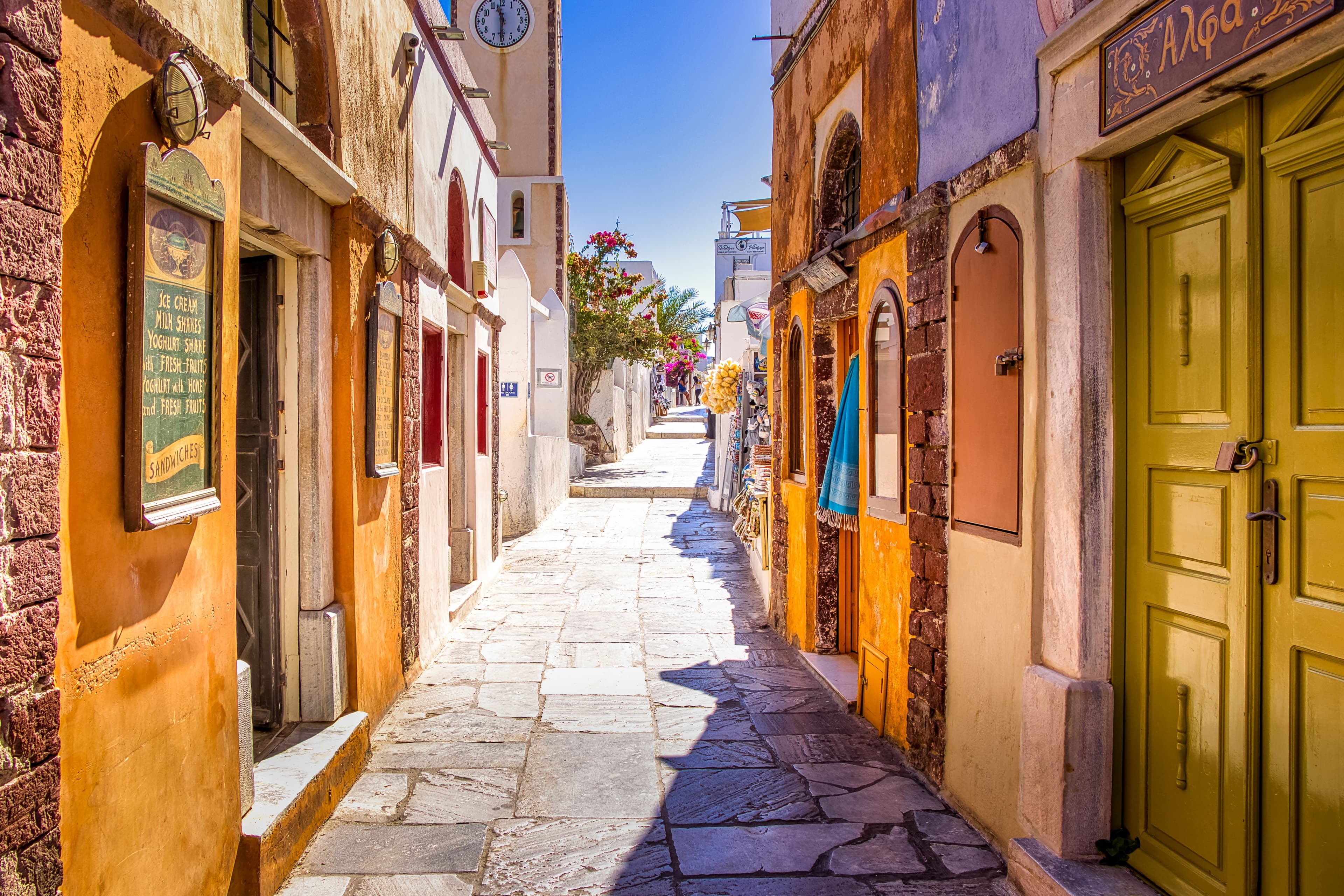
Greece · Port




Showing the next 12 cruises out of 240 visiting this port.
Previous ports
These ports appear before or after this stop on the same itinerary. The numbers show how often they occur together.
Explore cabin types, dining and deck facilities for each ship.
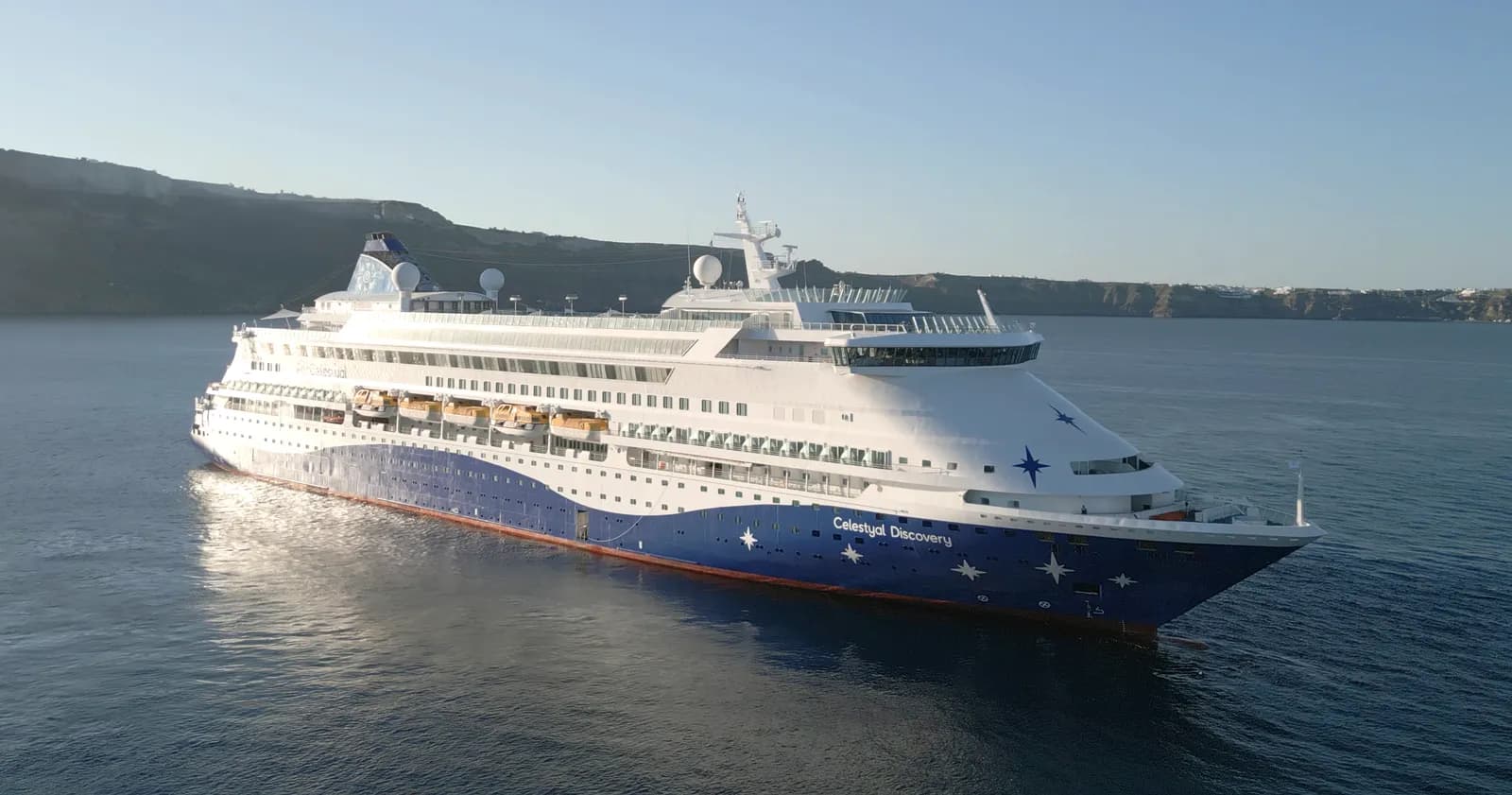
Celestyal Cruises · 288 sailings
6 cabin types · 8 dining venues · 14 entertainment options · 10 decks
Explore the ship

Celestyal Cruises · 117 sailings
5 cabin types · 9 dining venues · 22 entertainment options · 9 decks
Explore the ship

MSC Cruises · 103 sailings
11 cabin types · 6 dining venues · 46 entertainment options · 13 decks
Explore the ship
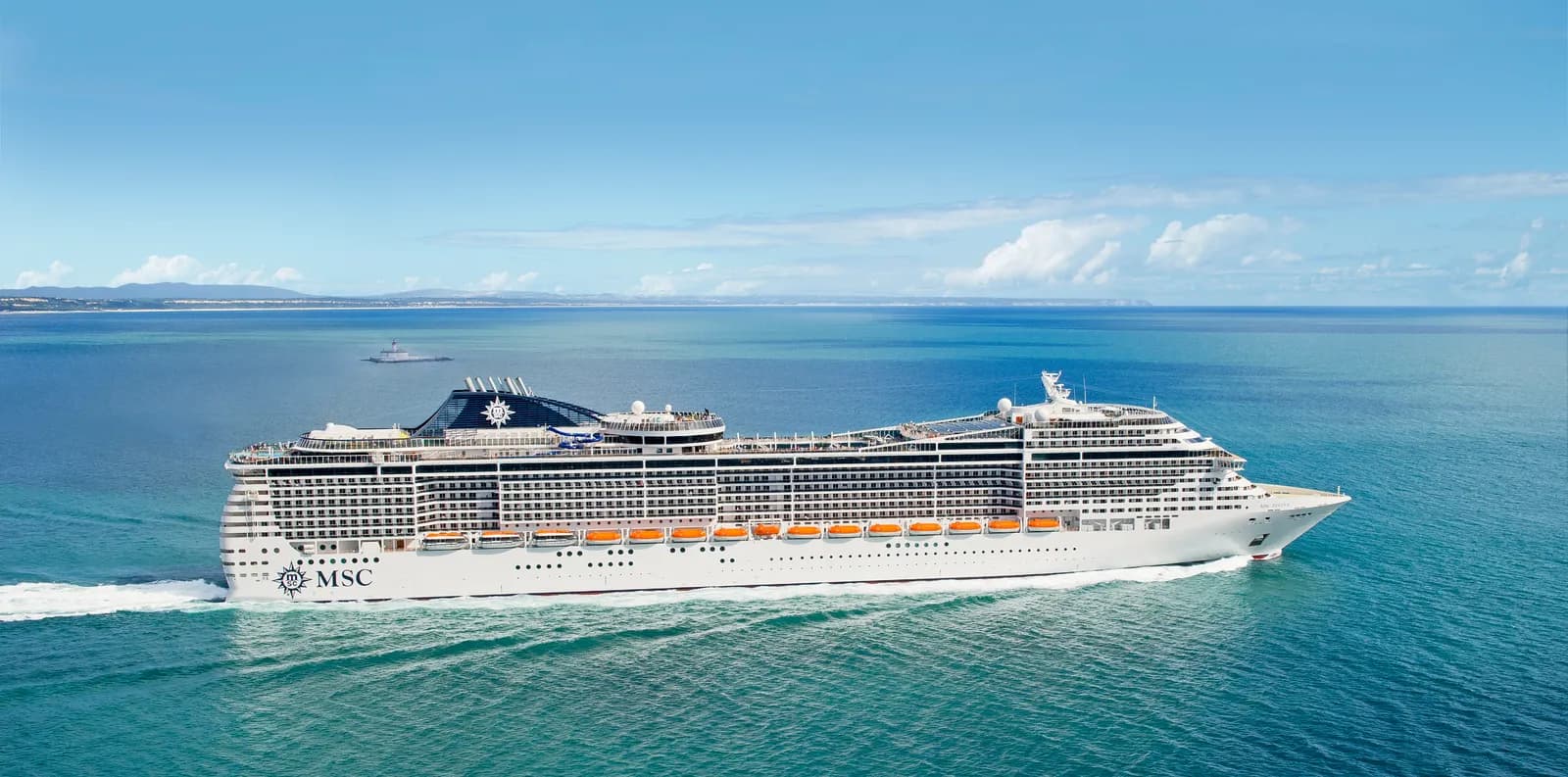
MSC Cruises · 78 sailings
20 cabin types · 9 dining venues · 50 entertainment options · 14 decks
Explore the ship
Cruise port in Greece
Allow about 15 min each way from the terminal to the city center. Average time in port: 11 hours. 37 places to explore.
Cruise ships dock at Santorini cruise terminals. Allow about 15 min each way from the terminal to the city center.
The assigned dock is one of Athinios Port, Old Port of Fira (Skala) and varies by sailing.
The one-way cable car fare between Old Port and Fira is 10 euros.
Time available at the destination after subtracting return travel.
Calculated from the average time in port. Return deadlines vary by sailing; check the daily programme on board.
Travel between the terminal, city center, railway station and airport.
Santorini Airport → Fira Bus Station
Take the KTEL bus from the airport to Fira. Pay the fare in cash on the bus.
Fira Bus Station → Oia
At Fira central bus station, check for and take a KTEL bus to Oia. Pay the fare on the bus.
Fira Bus Station → Athinios Port
At Fira Bus Station, check for a bus to Athinios Port and board it. Port buses are timed to ferry departures rather than running at fixed intervals throughout the day, so check the departure time posted at the stop.
Old Port of Fira (Skala) → Fira
Take the cable car from the Old Port of Fira station and get off at the upper station in Fira. A one-way ride costs 10 euros.
Fira Bus Station → Santorini Airport
At Fira central bus station, check for a bus to the airport and board it. Confirm the destination before boarding and pay the fare on the bus.
Fira cable car station → Fira Bus Station
Walk from the cable car station to Fira Bus Station.
Athinios Port → Fira
Take a taxi from Athinios Port to Fira. The listed fare is the usual taxi fare between the port and Fira.
Santorini Airport → Fira
Take a taxi from the airport taxi stand to Fira. The listed fare is the usual taxi fare between the airport and Fira.
Santorini Cable Car → Old Port of Fira (Skala)
Take the cable car from the upper station in Fira down to the Old Port. On days when several ships arrive, the queue is 45–60 minutes, so 60 minutes has been allowed for the wait. A one-way ride costs 10 euros.
Explore 21 checked places. Select a pin to see its card, or choose View on map from a card.
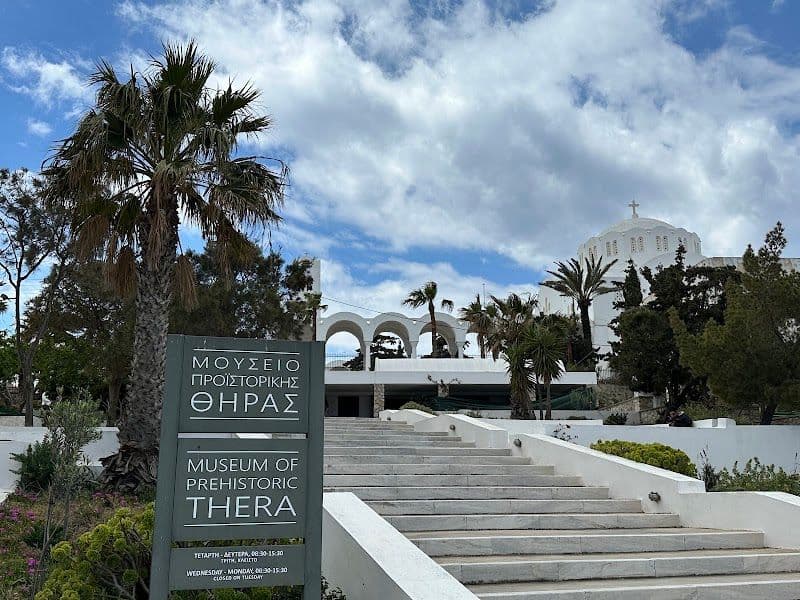
It has exhibits about artifacts excavated from the ancient city of Akrotiri and the island's geology.

A Fira photo spot known for its three bells and blue-domed roof.
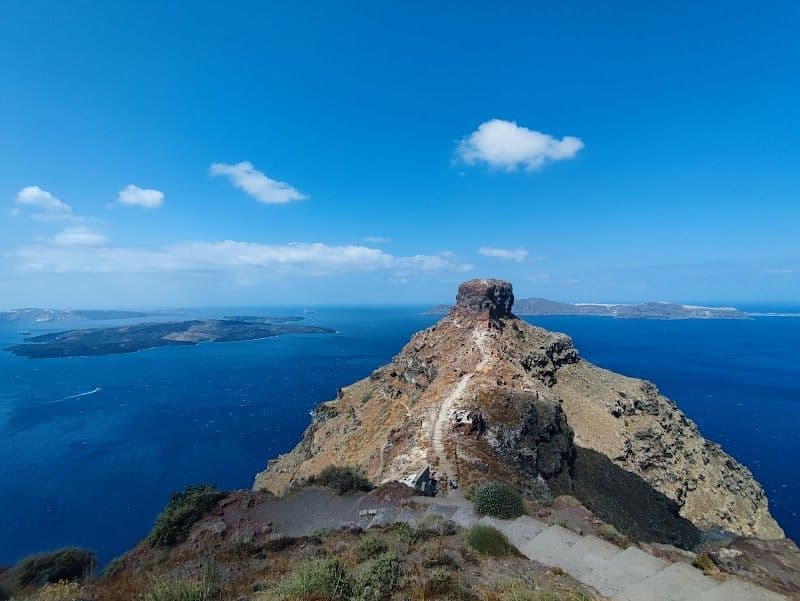
A rock that once held a medieval fortress protecting against pirates, now with ruins overlooking the Aegean Sea.
The route to Skaros Rock involves descending and climbing back up stairs, so consider the heat and your stamina, and bring water.

The largest church in Fira, featured for its interior frescoes and exterior mosaics.

A Baroque cathedral in the Catholic quarter of Fira, dedicated to Saint John the Baptist.

Exhibits about island life in a cave house, including an old winery, furniture, clothing, and art.
With enough time in port, you can explore beyond the city. One-way times are approximate.

A beach notable for its red cliffs. There is a rockfall risk at the cliffs, so take care when approaching.
Red Beach requires walking from the bus stop, and the unpaved path to the beach may be steep or slippery, so wear sturdy shoes.

A viewpoint in Akrotiri.
Several reviews say entry to the Akrotiri Lighthouse building was blocked, so plan to enjoy the views nearby rather than visit the interior.

You can see multi-story buildings, pottery, and drainage systems in an ancient harbor city destroyed by a volcanic eruption. The ruins have a roof and visitor walkways.

A beach with snow-white pebbles and clear water, accessible only by boat from Akrotiri. It is suitable for a short outing at sea.
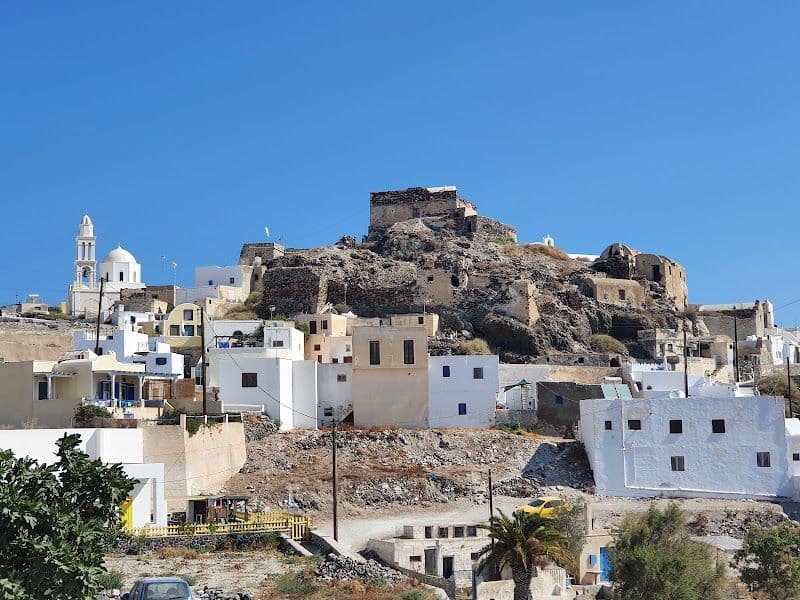
The remains of a castle high in Akrotiri village, including a tower where a tsabouna exhibition is held.

A village known for its white buildings perched on the cliffs and frequently photographed.
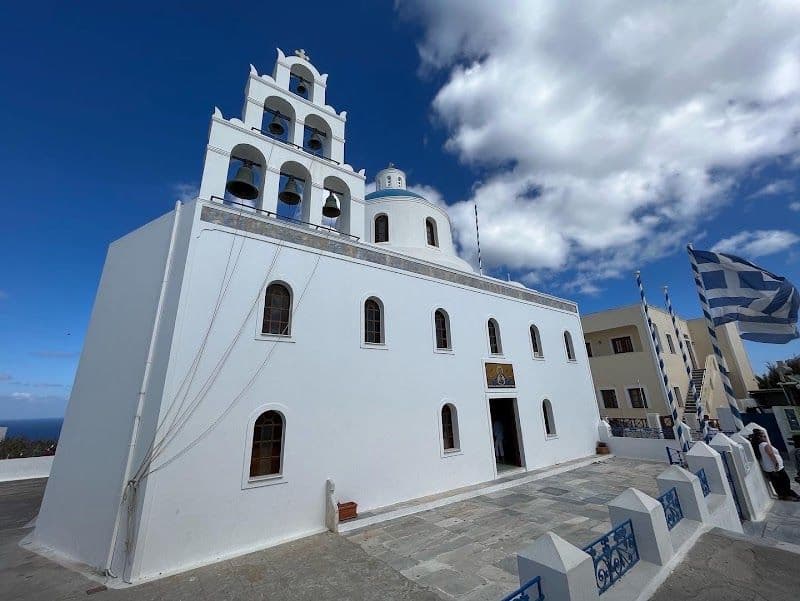
A church on Oia's main street, with a blue dome and bells; inside are murals and a statue of the Virgin Mary.
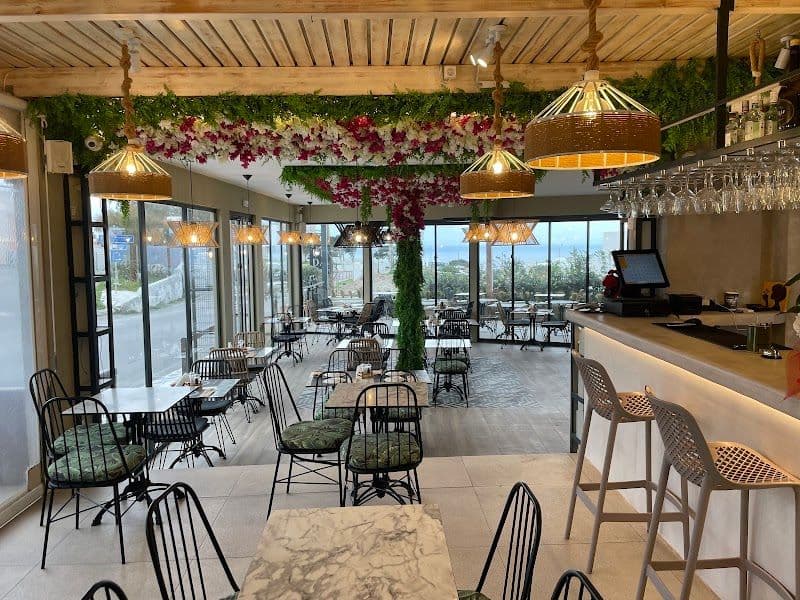
It is described as serving brunch, meals, desserts, and cocktails in Oia.

One of Oia's restaurants, identified as a leading option in a Santorini restaurant guide.
Reserve in advance if you want an outdoor table with a view at Roka.

A restaurant in Oia described as having sunset views.
Reserve in advance and arrive early if you want a rooftop seat at Elinikon during sunset.

A church with two large domes and one small dome, featured as a photo spot in Oia.
Reviews say the queue for photos of Oia’s blue domes took about 1 hour and 30 minutes during cruise season, so go before 10 a.m. or find another photo spot.

A restaurant in Oia on a spot like a balcony at the cliff's edge, with views of the caldera and volcano.

A fine-dining restaurant at Andronis Boutique Hotel in Oia, featured for its caldera and volcano views.

A traditional windmill featured alongside the castle ruins on a walking tour of Oia.
The narrow lanes around the Oia windmills get crowded, especially at sunset, so go early in the morning for a quieter visit.

Located at Katikies Santorini in Oia, it offers two tasting menus focused on local seasonal ingredients.

A small harbor below Oia's cliffs, seen from the castle ruins beyond cave houses and windmills.
1,110 sailings are grouped into 240 cruises by ship and route.
Celestyal CruisesMediterranean cruises · 3 nights · Short cruise
Celestyal CruisesMediterranean cruises · 26 nights · Long cruise
Celestyal CruisesMediterranean cruises · 4 nights · Short cruise
Celestyal CruisesCelestyal CruisesCelestyal CruisesCelestyal CruisesCelestyal CruisesEmerald CruisesMediterranean cruises · 17 nights · Long cruise
Holland America LineSailing 2027.04Mediterranean cruises · 25 nights · Long cruise
Princess CruisesPrincess CruisesMediterranean cruises · 36 nights · Long cruise
240 cruises call at this port.
Explore cabin types, dining and deck facilities for each ship.
Celestyal Cruises · 288 sailings
6 cabin types · 8 dining venues · 14 entertainment options · 10 decks
Explore the ship
Celestyal Cruises · 117 sailings
5 cabin types · 9 dining venues · 22 entertainment options · 9 decks
Explore the ship
MSC Cruises · 103 sailings
11 cabin types · 6 dining venues · 46 entertainment options · 13 decks
Explore the ship
MSC Cruises · 78 sailings
20 cabin types · 9 dining venues · 50 entertainment options · 14 decks
Explore the ship
Undoubtedly the most extraordinary island in the Aegean, crescent-shape Santorini remains a mandatory stop on the Cycladic tourist route—even if it's necessary to enjoy the sensational sunsets from Ia, the fascinating excavations, and the dazzling white towns with a million other travelers. Called Kállisti (the "Loveliest") when first settled, the island has now reverted to its subsequent name of Thira, after the 9th-century-BC Dorian colonizer Thiras. The place is better known, however, these days as Santorini, a name derived from its patroness, St. Irene of Thessaloniki, the Byzantine empress who restored icons to Orthodoxy and died in 802. You can fly conveniently to Santorini, but to enjoy a true Santorini rite of passage, opt instead for the boat trip here, which provides a spectacular introduction. After the boat sails between Sikinos and Ios, your deck-side perch approaches two close islands with a passage between them. The bigger one on the left is Santorini, and the smaller on the right is Thirassia. Passing between them, you see the village of Ia adorning Santorini's northernmost cliff like a white geometric beehive. You are in the caldera (volcanic crater), one of the world's truly breathtaking sights: a demilune of cliffs rising 1,100 feet, with the white clusters of the towns of Fira and Ia perched along the top. The bay, once the high center of the island, is 1,300 feet in some places, so deep that when boats dock in Santorini's shabby little port of Athinios, they do not drop anchor. The encircling cliffs are the ancient rim of a still-active volcano, and you are sailing east across its flooded caldera. On your right are the Burnt isles, the White isle, and other volcanic remnants, all lined up as if some outsize display in a geology museum. Hephaestus's subterranean fires smolder still—the volcano erupted in 198 BC, about 735, and there was an earthquake in 1956. Indeed, Santorini and its four neighboring islets are the fragmentary remains of a larger landmass that exploded about 1600 BC: the volcano's core blew sky high, and the sea rushed into the abyss to create the great bay, which measures 10 km by 7 km (6 mi by 4½ mi) and is 1,292 feet deep. The other pieces of the rim, which broke off in later eruptions, are Thirassia, where a few hundred people live, and deserted little Aspronissi ("White isle"). In the center of the bay, black and uninhabited, two cones, the Burnt Isles of Palea Kameni and Nea Kameni, appeared between 1573 and 1925. There has been too much speculation about the identification of Santorini with the mythical Atlantis, mentioned in Egyptian papyri and by Plato (who says it's in the Atlantic), but myths are hard to pin down. This is not true of old arguments about whether tidal waves from Santorini's cataclysmic explosion destroyed Minoan civilization on Crete, 113 km (70 mi) away. The latest carbon-dating evidence, which points to a few years before 1600 BC for the eruption, clearly indicates that the Minoans outlasted the eruption by a couple of hundred years, but most probably in a weakened state. In fact, the island still endures hardships: since antiquity, Santorini has depended on rain collected in cisterns for drinking and irrigating—the well water is often brackish—and the serious shortage is alleviated by the importation of water. However, the volcanic soil also yields riches: small, intense tomatoes with tough skins used for tomato paste (good restaurants here serve them); the famous Santorini fava beans, which have a light, fresh taste; barley; wheat; and white-skin eggplants.
Cruise lines calling here: 13 places
Ports frequently visited before this one
Tell us your travel dates, party size and budget to find suitable cruises calling here.
Some booking links are affiliate links. TravelersMap may earn a commission when you book, at no extra cost to you.