Piraeus station → Syntagma Square
At Piraeus station, take metro line 3 and get off at Syntagma Square.
Opening CruiseMap…

Greece · Port






Showing the next 12 cruises out of 398 visiting this port.
Previous ports
These ports appear before or after this stop on the same itinerary. The numbers show how often they occur together.
Explore cabin types, dining and deck facilities for each ship.

MSC Cruises · 221 sailings
11 cabin types · 6 dining venues · 46 entertainment options · 13 decks
Explore the ship

Celestyal Cruises · 141 sailings
5 cabin types · 9 dining venues · 22 entertainment options · 9 decks
Explore the ship

MSC Cruises · 67 sailings
16 cabin types · 8 dining venues · 46 entertainment options · 14 decks
Explore the ship
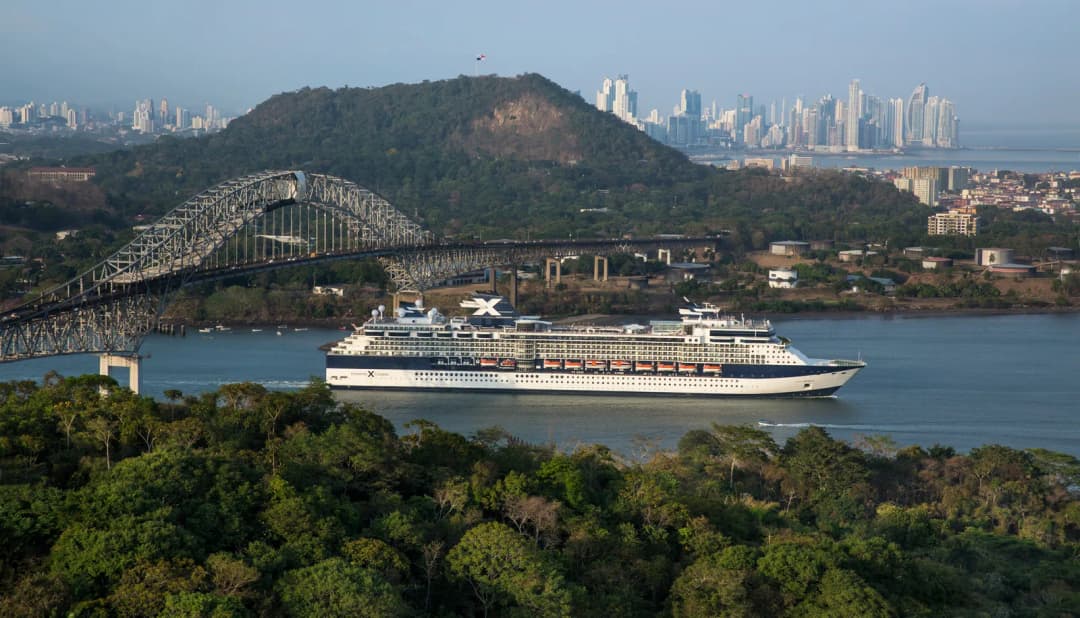
Celebrity Cruises · 58 sailings
27 cabin types · 11 dining venues · 33 entertainment options · 12 decks
Explore the ship
Cruise port in Greece
Explore on foot directly from the pier. Average time in port: 10 hours. 39 places to explore.
Cruise ships dock at Piraeus cruise terminals. Explore on foot directly from the pier.
The assigned dock is one of Piraeus International Passenger Terminal C – Alkimos, Piraeus International Passenger Terminal A and varies by sailing.
Signs at the port entrance show where each ship is berthed.
Time available at the destination after subtracting return travel.
Calculated from the average time in port. Return deadlines vary by sailing; check the daily programme on board.
Travel between the terminal, city center, railway station and airport.
Piraeus station → Syntagma Square
At Piraeus station, take metro line 3 and get off at Syntagma Square.
Piraeus International Passenger Terminal B – Themistocles → Piraeus station
Exit the port toward Terminal A and continue to Piraeus station. Walking between the station and Terminal B takes about 25–30 minutes.
Piraeus International Passenger Terminal A → Piraeus station
Walk from the terminal along the port road to Piraeus station. Without luggage, it takes about 12–15 minutes from Terminal A to the station.
Piraeus International Passenger Terminal C – Alkimos → Dimotiko Theatro station
Walk from Gate 12 to Dimotiko Theatro station. The stated walk from Terminals B and C takes about 30 minutes.
Athens International Airport (ATH) → Piraeus station
At the airport station, take the blue metro line 3 toward Piraeus and get off at Piraeus station. No transfer is needed.
Piraeus station → Piraeus International Passenger Terminal A
Exit the station and take bus 843 or 859 from the stop opposite the port toward Akti Xaveriou. Get off at ‘Τελωνείο’.
Athens International Airport (ATH) → Piraeus cruise port
Take a taxi from the airport to Piraeus cruise port. The 60 minutes and 60 euros are approximate guidance and vary with traffic; confirm your assigned terminal before departure.
Explore 14 checked places. Select a pin to see its card, or choose View on map from a card.

A museum covering the history of Piraeus and its collection of bronze statues.
Reviews say the Piraeus Archaeological Museum accepted cash only, so bring cash for admission.

It displays rare books, maps, flags, naval weapons, and part of the hull of the submarine Papanikolis.
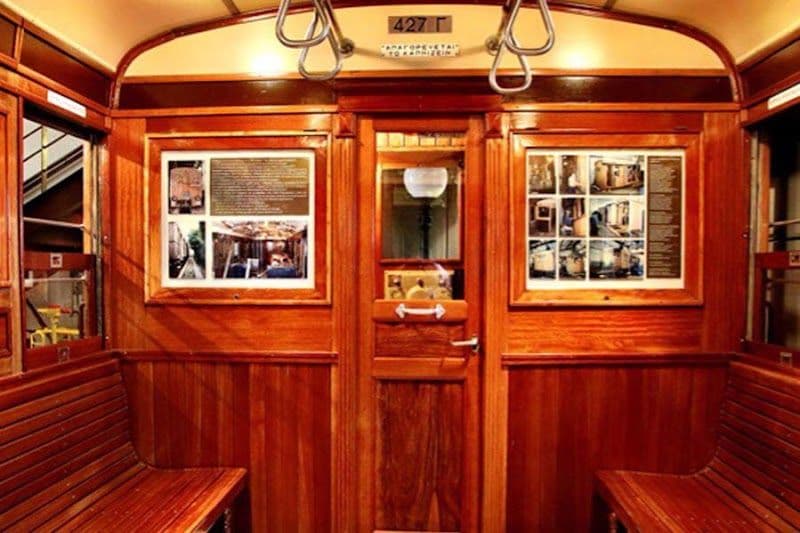
A small museum inside Piraeus Station, displaying a restored old wooden passenger carriage, railway photos, and memorabilia.
The explanatory signs at the Piraeus Electric Railway Museum are in Greek, and reviews say visitors were stopped from using phone translation apps, so ask for an English guidebook.

A Neoclassical building visible from a square in central Piraeus.
With enough time in port, you can explore beyond the city. One-way times are approximate.

A major archaeological site in Athens with the Parthenon. The source recommends allowing 1 hour 30 minutes to 2 hours to visit the site itself.
The Acropolis can be crowded, so consider an early-morning entry first if you want a less busy time.

The stadium that hosted the opening and closing ceremonies of the first modern Olympic Games in 1896.
Reviews say running on the track at the Panathenaic Stadium was restricted due to maintenance, so check the situation before visiting if you want to use the track.

Greece's largest museum; the source says it contains at least 11,000 exhibits.
The National Archaeological Museum may be crowded with tour bus groups, so visit early in the morning or late in the afternoon.

It houses at least 4,000 finds from the Acropolis excavations. You can also see the excavation site beneath the glass floor.

Temple ruins in central Athens, with 15 of the original 104 Corinthian columns still standing.
Restoration screens and scaffolding may limit what is visible at the Temple of Olympian Zeus, so check the construction status before entering.
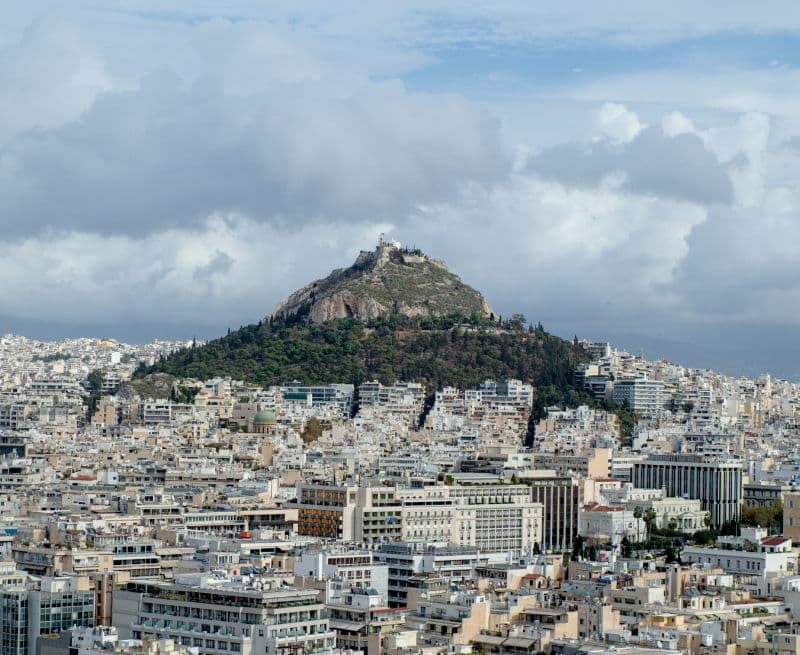
A high viewpoint in Athens, with views of the Acropolis and out toward the sea.

At the Tomb of the Unknown Soldier in front of the square, guards in traditional uniforms change shifts. According to the source, the ceremony takes place every hour.
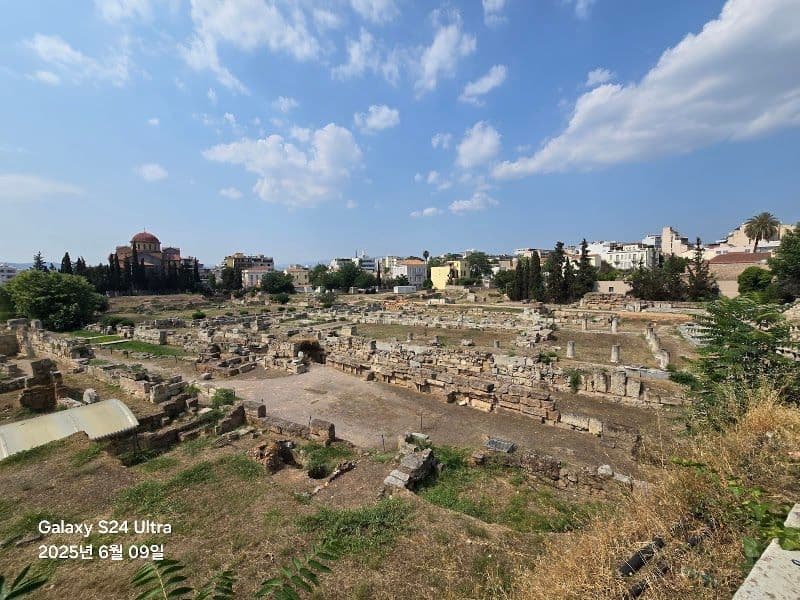
Athens' former main cemetery and pottery-production area, with tombs, monuments, and traces of the old city walls.
Recent reviews say the Kerameikos archaeological site is temporarily closed for restoration, so check whether it is open on the official website before traveling there.

Ruins of an ancient cultural facility in Athens. It included not only a place to store books but also study rooms and lecture halls.

Athens' oldest residential district, with narrow cobbled lanes, Neoclassical houses, and small Byzantine churches.
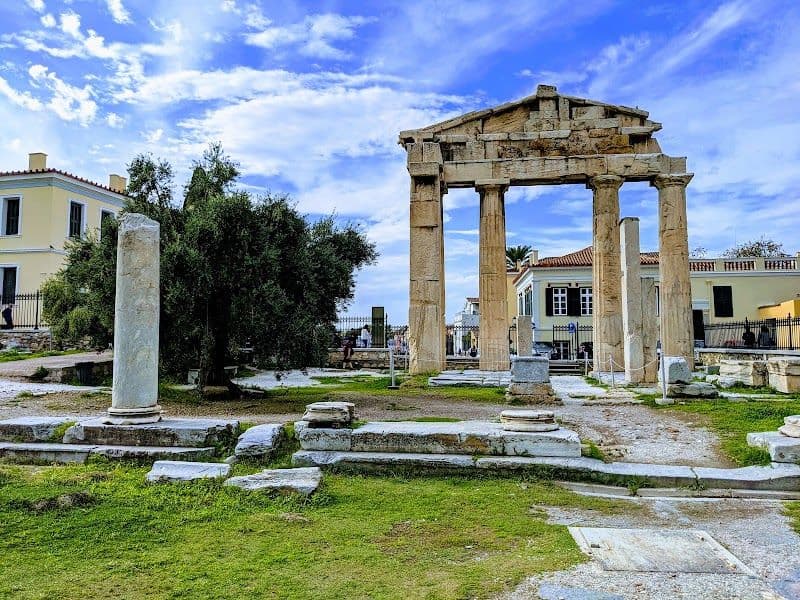
A ruin that became the commercial center of Athens, replacing the ancient Agora. You can see the Tower of the Winds up close.
The entrance and ticket office for the Roman Agora are in separate locations, so check where the ticket office is first if you plan to buy a ticket on site.

A small cluster of white houses on the north side of the Acropolis hill. The source says 45 houses remain today.

One of Athens' main shopping streets, running from Syntagma Square.

A popular souvlaki shop beside Monastiraki Square. Buy a souvlaki and enjoy it on a bench with a view of the Acropolis.

A restaurant where you can order several dishes to share, including sausage, red peppers, and eggplant. There is live folk music on most nights, and home-style dishes are simmered in large pots.
Reviews say Klimataria charged €3 per person when there was live music, so check the menu for extra charges before ordering.

It serves grilled meats such as kebabs, gyros, and souvlaki with pita near Monastiraki.
There are specific reviews saying Savvas charged more than the prices shown on the menu outside, so check the displayed prices before ordering and compare them with the bill.

It serves traditional Greek coffee with sweet and savory pastries and spoon sweets in Plaka.

A traditional Greek restaurant in a small lane in Exarchia, serving moussaka in a clay pot.

A Greek restaurant serving moussaka and pork souvlaki, popular enough to have waiting customers.

It serves Levantine street food inspired by family recipes from Greece, Türkiye, and the eastern Mediterranean, including lahmacun and peinirli.

A restaurant serving traditional Greek food such as moussaka, as well as ravioli and grilled squid.

A restaurant serving modern takes on Greek pita. Meat is prepared and grilled in an open kitchen, and the bread, sauces, and vegetables are prepared in-house.

A Saturday morning market along Kallidromiou Street in Exarchia, part of Athenians' weekly shopping tradition. It sells fresh fruit, vegetables, olives, herbs, honey, and homemade preserves.

The Acropolis can be seen from the square. The Sunday flea market features vintage records, handmade jewelry, antique coins, and more.

The Temple of Poseidon is at the southernmost tip of the Attica peninsula, about 100 kilometers along the coast from central Athens.
1,146 sailings are grouped into 398 cruises by ship and route.
MSC CruisesCelestyal CruisesMediterranean cruises · 4 nights · Short cruise
MSC CruisesCelestyal CruisesMediterranean cruises · 26 nights · Long cruise
MSC CruisesSailing 2026.11Mediterranean cruises · 7 nights
MSC CruisesCelestyal CruisesMediterranean cruises · 22 nights · Long cruise
Regent Seven Seas CruisesSailing 2026.11Mediterranean cruises · 10 nights · Mid-length cruise
Celestyal CruisesMediterranean cruises · 8 nights · Mid-length cruise
Regent Seven Seas CruisesSailing 2026.12Mediterranean cruises · 14 nights · Long cruise
Celestyal CruisesSailing 2026.12Mediterranean cruises · 15 nights · Long cruise
MSC CruisesMediterranean cruises · 7 nights
398 cruises call at this port.
Explore cabin types, dining and deck facilities for each ship.
MSC Cruises · 221 sailings
11 cabin types · 6 dining venues · 46 entertainment options · 13 decks
Explore the ship
Celestyal Cruises · 141 sailings
5 cabin types · 9 dining venues · 22 entertainment options · 9 decks
Explore the ship
MSC Cruises · 67 sailings
16 cabin types · 8 dining venues · 46 entertainment options · 14 decks
Explore the ship
Celebrity Cruises · 58 sailings
27 cabin types · 11 dining venues · 33 entertainment options · 12 decks
Explore the ship
It's no wonder that all roads lead to the fascinating and maddening metropolis of Athens. Lift your eyes 200 feet above the city to the Parthenon, its honey-color marble columns rising from a massive limestone base, and you behold architectural perfection that has not been surpassed in 2,500 years. But, today, this shrine of classical form dominates a 21st-century boomtown. To experience Athens—Athína in Greek—fully is to understand the essence of Greece: ancient monuments surviving in a sea of cement, startling beauty amid the squalor, tradition juxtaposed with modernity. Locals depend on humor and flexibility to deal with the chaos; you should do the same. The rewards are immense. Although Athens covers a huge area, the major landmarks of the ancient Greek, Roman, and Byzantine periods are close to the modern city center. You can easily walk from the Acropolis to many other key sites, taking time to browse in shops and relax in cafés and tavernas along the way. From many quarters of the city you can glimpse "the glory that was Greece" in the form of the Acropolis looming above the horizon, but only by actually climbing that rocky precipice can you feel the impact of the ancient settlement. The Acropolis and Filopappou, two craggy hills sitting side by side; the ancient Agora (marketplace); and Kerameikos, the first cemetery, form the core of ancient and Roman Athens. Along the Unification of Archaeological Sites promenade, you can follow stone-paved, tree-lined walkways from site to site, undisturbed by traffic. Cars have also been banned or reduced in other streets in the historical center. In the National Archaeological Museum, vast numbers of artifacts illustrate the many millennia of Greek civilization; smaller museums such as the Goulandris Museum of Cycladic Art Museum and the Byzantine and Christian Museum illuminate the history of particular regions or periods. Athens may seem like one huge city, but it is really a conglomeration of neighborhoods with distinctive characters. The Eastern influences that prevailed during the 400-year rule of the Ottoman Empire are still evident in Monastiraki, the bazaar area near the foot of the Acropolis. On the northern slope of the Acropolis, stroll through Plaka (if possible by moonlight), an area of tranquil streets lined with renovated mansions, to get the flavor of the 19th-century's gracious lifestyle. The narrow lanes of Anafiotika, a section of Plaka, thread past tiny churches and small, color-washed houses with wooden upper stories, recalling a Cycladic island village. In this maze of winding streets, vestiges of the older city are everywhere: crumbling stairways lined with festive tavernas; dank cellars filled with wine vats; occasionally a court or diminutive garden, enclosed within high walls and filled with magnolia trees and the flaming trumpet-shaped flowers of hibiscus bushes. Formerly run-down old quarters, such as Thission, Gazi and Psirri, popular nightlife areas filled with bars and mezedopoleia (similar to tapas bars), are now in the process of gentrification, although they still retain much of their original charm, as does the colorful produce and meat market on Athinas. The area around Syntagma Square, the tourist hub, and Omonia Square, the commercial heart of the city about 1 km (½ mi) northwest, is distinctly European, having been designed by the court architects of King Otho, a Bavarian, in the 19th century. The chic shops and bistros of ritzy Kolonaki nestle at the foot of Mt. Lycabettus, Athens's highest hill (909 feet). Each of Athens's outlying suburbs has a distinctive character: in the north is wealthy, tree-lined Kifissia, once a summer resort for aristocratic Athenians, and in the south and southeast lie Glyfada, Voula, and Vouliagmeni, with their sandy beaches, seaside bars, and lively summer nightlife. Just beyond the city's southern fringes is Piraeus, a bustling port city of waterside fish tavernas and Saronic Gulf views.
Cruise lines calling here: 12 places
Ports frequently visited after this one
Tell us your travel dates, party size and budget to find suitable cruises calling here.
Some booking links are affiliate links. TravelersMap may earn a commission when you book, at no extra cost to you.